Why Automotive and Transportation Companies Need a Specialized Website Design Partner
Specialized automotive and transportation companies operate in environments where precision, reputation, and consistency are not optional, whether that involves fleet service companies, rebuild operations, performance-driven projects, or highly technical work where expectations are consistently high and clients are making informed, deliberate decisions. In this kind of environment, a transportation company website or automotive website design is not simply a digital brochure or a place to list services, it becomes one of the first points of evaluation for potential clients and partners who are trying to understand capabilities, assess credibility, and determine whether a company operates at the level they are looking for before ever reaching out. When the website clearly reflects the quality, structure, and professionalism of the business, it reinforces confidence and helps move conversations forward naturally, but when it falls even slightly out of alignment with the actual operation, it can introduce hesitation that is rarely communicated directly yet often influences whether an opportunity progresses or quietly disappears.
Why Traditional Website Firms Fall Short
Most website design companies are structured around serving a wide range of industries with processes designed for efficiency, scalability, and speed, relying on repeatable systems, templated layouts, and generalized messaging to move quickly from one project to another. While this approach can work for broader markets, it tends to fall short when
applied to automotive website design and transportation company website needs, where the details, workflows, and buyer expectations are far more nuanced and require a deeper level of understanding. Companies operating in areas such as fleet service
companies, rebuild operations, and performance-focused environments are not easily captured through surface-level discovery or generic positioning, because their services are more complex, their buyers are more informed, and their decisions are often made with greater scrutiny.
Without taking the time to understand how these businesses actually operate, many firms deliver websites that look modern on the surface but fail to communicate the true value of the company or how it differentiates itself in the market. Over time, this creates a disconnect where the digital presence does not fully align with the quality, capability, or professionalism of the business itself, limiting how effectively the website supports growth, positioning, and long-term credibility.
How Even Good Websites Lose Their Edge Over Time
Even a well-built website can become less effective over time, not because it was done poorly, but because the business itself continues to evolve while the website does not always keep pace in a structured or intentional way. As companies expand their capabilities, take on more advanced projects, and refine how they operate, those improvements are not always reflected clearly within the automotive or transportation company website, which can make it more difficult for visitors to fully understand the true scope and level of the business. This is especially common among fleet service companies and industrial operations where the work becomes more sophisticated over time, yet the website continues to present a simplified version of services, processes, and capabilities, ultimately creating a gap between how the business performs internally and how it is perceived externally.
This misalignment often appears in messaging that no longer reflects how the business operates, services that are not clearly defined or differentiated, and project work that is not showcased in a way that builds confidence or demonstrates expertise. While none of these issues may seem significant on their own, together they shape how a potential client interprets the business and whether they feel confident enough to take the next step. In industries where buyers are conducting their own research, comparing multiple options, and forming opinions before ever making contact, the clarity and structure of the website play a direct role in determining whether that opportunity moves forward or is quietly lost.
What a Specialized Website Design Partner Does Differently
A specialized website design partner approaches the process with a fundamentally different mindset, focusing first on understanding the business rather than immediately moving into design or development. This includes learning how services are delivered, how clients evaluate options, and what information is most important during the decision-making process, which allows the website to be built around the actual structure and strengths of the company rather than forcing it into a generic framework. In the context of automotive website design and transportation company website development, this level of understanding is critical because the value of the business cannot be communicated effectively without it.
With that foundation in place, the website is structured to clearly communicate services, guide visitors through the company’s process, and present work in a way that reinforces credibility and builds trust. Instead of relying on broad or generic language, the messaging reflects the real value of the business and helps potential clients quickly understand what sets it apart. This approach also continues beyond the initial build, as the website is refined over time to improve performance, expand content, and stay aligned with both search behavior and the growth of the company, allowing it to function as a long-term asset rather than a one-time project.
What This Means for Your Automotive or Transportation Business
Specialized automotive and transportation companies operate in environments where attention to detail, consistency, and performance are essential to success, whether that involves complex rebuild work, high-level fleet operations, or performance-driven industries where expectations are consistently high. A website design for automotive companies should reflect that same level of precision and professionalism, ensuring that the digital presence aligns with the quality of the work being performed. When this alignment is achieved, the website becomes more than just an informational tool and instead plays a meaningful role in reinforcing credibility and positioning within the market.
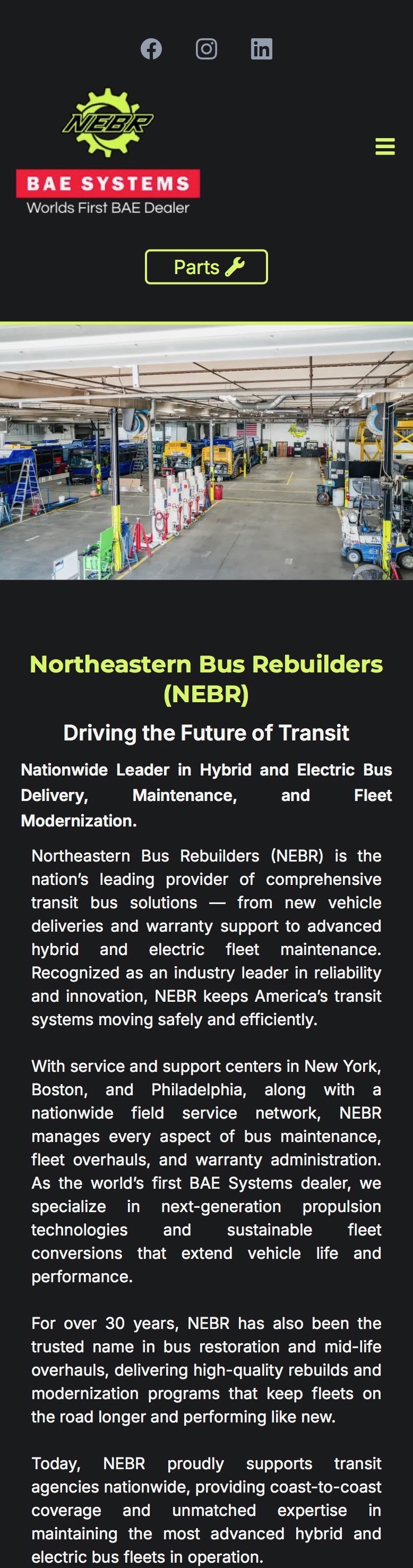
A well-structured transportation company website allows potential clients to quickly understand what the company does while also communicating the depth and expertise behind those capabilities. By presenting services clearly, showcasing real work effectively, and guiding visitors through the information in a logical way, the website helps reduce confusion and build confidence before any direct interaction takes place, ultimately supporting stronger and more productive conversations.
From a Website to a Strategic Asset
The difference between a basic website and a true strategic asset comes down to alignment, clarity, and ongoing refinement, all of which contribute to how effectively the site supports the business over time. When an automotive website design is built to accurately reflect the company’s capabilities, communicate its value clearly, and evolve alongside the business, it becomes an active part of the company’s positioning rather than a static presence that is revisited infrequently. This is particularly important for transportation company websites and fleet service companies, where credibility and trust play a major role in attracting the right clients.
For specialized automotive companies, this shift is not simply about improving design or making incremental updates, it is about ensuring that the website fully represents the level at which the business operates and continues to support its growth moving forward. When that alignment is achieved, the website becomes a meaningful asset that strengthens credibility, improves how opportunities are qualified, and helps attract clients who are a better fit for the company’s services, ultimately contributing to long-term success.
