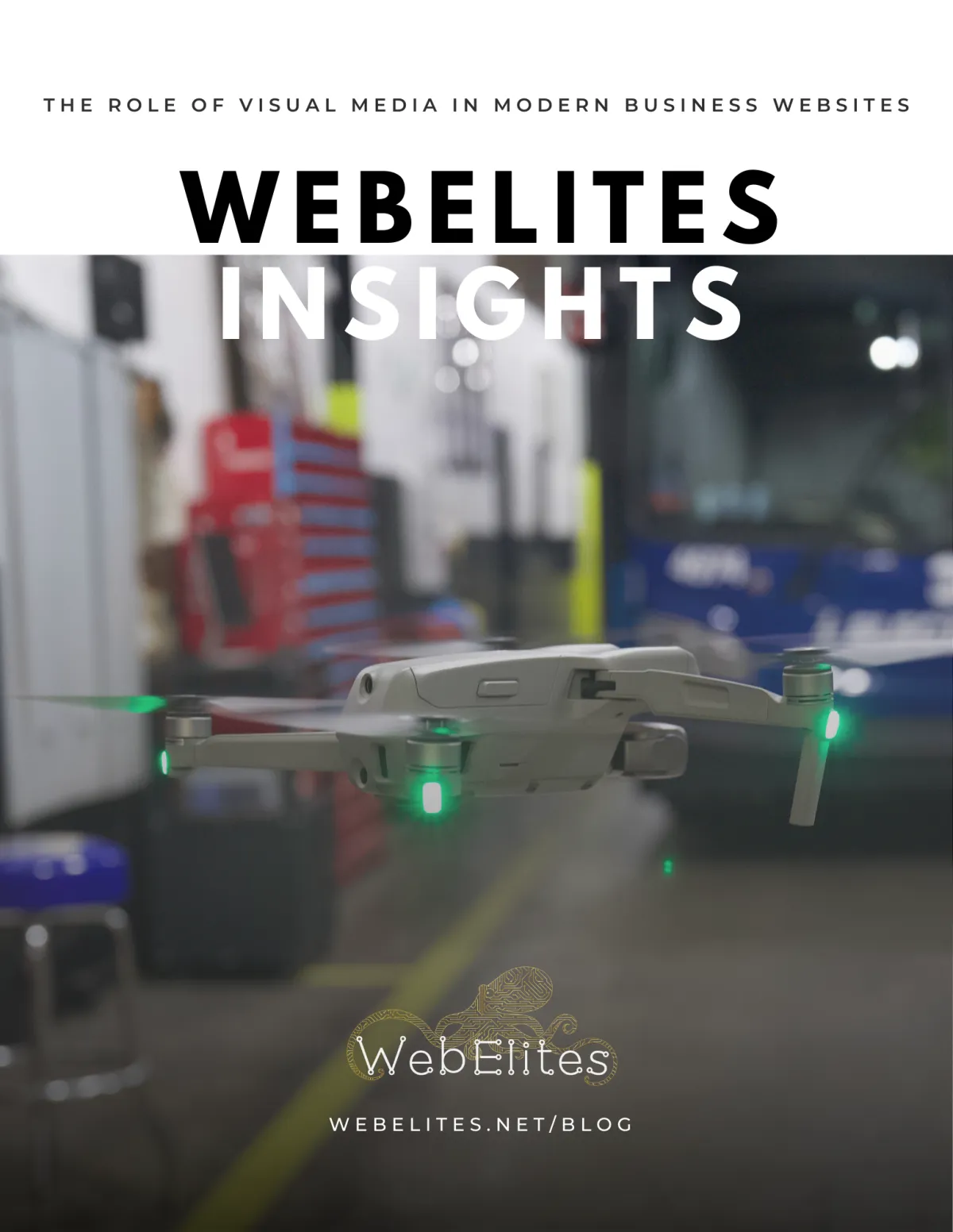
The Role of Visual Media in Modern Business Websites
As companies grow, their presentation carries more weight. Not only in sales conversations, but in how they are perceived before those conversations ever begin. For mid-sized businesses, visual media is no longer a secondary detail added to support written content. It becomes part of how the company is evaluated. Photography, videography, and structured digital media directly influence how a business is interpreted in its market.
The website is often the first controlled environment where perception is formed. Long before a proposal is requested or a meeting is scheduled, visitors are drawing conclusions based on what they see. If the visual presentation does not reflect the true level of the organization, that gap becomes noticeable. It may not be explicitly addressed, but it influences how confidently someone moves forward.
What worked when a company was smaller often stops working as it matures. A handful of generic images and minimal visual structure may have once been sufficient. As the organization scales, expectations increase. Buyers expect clarity. Partners expect professionalism. Recruits expect legitimacy. Visual media becomes part of meeting those expectations in a quiet but measurable way.
Visual Media Establishes Standard Before Language Does
Most website evaluations begin visually, even when the visitor intends to read carefully. Layout, imagery, tone, and composition are processed immediately. Within seconds, assumptions are formed about operational scale, internal structure, and overall credibility. These assumptions influence how the written content is interpreted afterward.

When imagery feels outdated, inconsistent, or generic, the business appears less structured than it may actually be. Conversely, when photography and video are composed intentionally and presented cohesively, the organization feels established and controlled. Visual discipline reinforces operational discipline.
Professional digital media does not aim to impress through excess. It aims to align perception with reality. For mid-sized companies operating in competitive or specialized industries, that alignment reduces hesitation and builds confidence before a conversation ever takes place.
A well-executed image of a production floor, corporate environment, or operational process provides immediate context. It reduces ambiguity and demonstrates that the business operates at a tangible, professional scale. In many cases, this visual confirmation carries more weight than paragraphs of explanation.
Authentic Photography Makes Capability Visible
Mid-sized companies often possess capabilities that are difficult to fully communicate through text alone. Infrastructure, equipment, team experience, workflow systems, and internal processes are strengths that deserve visibility. When these elements are not documented properly, they remain abstract to outside observers.
Professional photography transforms capability into evidence. It captures the environment where work is performed and presents it in a way that reflects organization and intention. Rather than relying on description, the website allows visitors to see how the company operates.
Stock imagery may fill visual space, but it rarely builds credibility. It lacks specificity. It lacks authenticity. Over time, experienced buyers recognize generic visuals immediately. Authentic, brand-aligned photography, on the other hand, signals stability. It demonstrates that the company is confident enough to present its real environment rather than a placeholder representation.
When team members, leadership, and operational environments are presented clearly and consistently, the website begins to feel grounded. It reflects a business that understands its own structure and is comfortable presenting it.
Videography Accelerates Understanding and Reduces Uncertainty
Video serves a distinct role within professional visual media. While photography provides proof, videography provides perspective. It captures movement, process, and tone in ways that static imagery cannot replicate.
A concise, well-produced brand video can clarify mission, scope, and operational rhythm within minutes. It allows visitors to observe how the organization communicates, how it presents itself, and how it structures its environment. This observational clarity reduces uncertainty before the first interaction occurs.

When integrated strategically within a website, video increases engagement without overwhelming the experience. It should feel purposeful rather than decorative. Embedded properly, videography supports user flow, strengthens comprehension, and increases the likelihood that a visitor remains engaged long enough to take the next step.
For companies competing in established markets, the ability to accelerate understanding provides a measurable advantage. Reduced ambiguity leads to more informed inquiries and stronger initial conversations.
Consistency Signals Discipline
As organizations mature, inconsistency becomes more visible. A small company may be forgiven for uneven presentation, but a mid-sized organization is evaluated differently. Variations in lighting, editing style, composition, or tone from page to page subtly communicate fragmentation, even when internal operations are structured.
Professional content creation ensures visual cohesion across the entire website. Service pages should not feel disconnected from one another. Team imagery should align in tone and quality with operational photography. Video elements should complement the surrounding brand environment rather than compete with it.
Consistency does not require uniformity in subject matter. It requires alignment in execution. When digital media is cohesive, the website feels stable. Stability reinforces credibility. Over time, that credibility supports stronger positioning within the market.
Performance and Presentation Must Work Together
Strong visual media must also be implemented responsibly. High-resolution photography and professionally produced video require proper optimization to maintain performance standards. Load speed, mobile responsiveness, and structured formatting all influence how effectively a website functions over time.

Visual quality should not compromise technical stability. Images must be sized appropriately. Files must
be compressed without degrading clarity. Alt text and structured tagging should support accessibility and search visibility. These technical considerations are not visible to most visitors, but they directly impact how the website performs.
Professional digital media operates at the intersection of creative execution and technical discipline. When both elements are handled correctly, the result is a website that feels refined while remaining efficient. That balance becomes increasingly important as expectations continue to rise.
Visual Media Should Reflect Operational Maturity
Many companies outgrow their original visual identity without recognizing it. The business evolves. Capabilities expand. Revenue increases. Yet the website continues to present minimal or outdated imagery that no longer reflects the organization’s true scale.
This disconnect creates friction. Even when operations are strong, presentation lags behind. Prospects may hesitate not because of capability, but because perception feels uncertain.
Elevated visual media aligns presentation with reality. It ensures that the website reflects the current stage of the business rather than a previous one. For mid-sized companies focused on long-term growth, this alignment becomes part of responsible brand management.
The Expectation Has Shifted
Professional photography, videography, and structured digital media are no longer differentiators. They are expectations. As industries mature and competition increases, presentation standards rise accordingly. Businesses that treat visual media as secondary will increasingly appear stagnant, even when they are not.
Mid-sized companies should expect their visual media to reinforce clarity, consistency, and confidence. It should reduce uncertainty rather than introduce it. It should support operational credibility rather than distract from it.
When visual media is treated as integrated infrastructure rather than decoration, it becomes a quiet but powerful contributor to how the business is evaluated. At scale, that evaluation influences every conversation that follows.
